

You are good enough.
Neurodivergent-Affirming Care
You’re working so hard to keep your head above water.
When you experience neurodivergence such as autism or ADHD, it feels like you are playing a game on the hardest setting, without any cheat codes. Task initiation, social interactions, emotional regulation, and all the day-to-day responsibilities that come with being an adult quickly becomes overwhelming. Instead of pushing through until you reach inevitable burnout, you can give yourself permission to slow down long enough to meet your ignored needs. You can practice dropping the mask in a safe space, and finally experience what it feels like to be yourself.
Working together we can explore…
How your childhood and early adulthood experiences impact the way you see yourself and others.
How using shame and procrastination to get things done ends up keeping you stuck - and what to do instead.
How to create systems to manage stress in your day-to-day life.
How to use nervous system regulation and sensory-soothing as coping skills.
Late-identified neurodivergent adults often experience a desire to explore how their diagnosis
impacts their identity.
Neurodiversity is more than a buzzword.
The field of mental health is finally starting to gain traction in better understanding autism, ADHD, and other neurodivergent experiences. While this is a great step forward, it also leaves many asking the following questions.
-
Neurodivergent is an emerging term used to describe a "divergence" from what society considers typical brain development. This term most often refers to autism and ADHD, though is also used to describe any neurological condition (including depression, anxiety, OCD, and PTSD). At its core, neurodivergent-affirming care prioritizes believing, normalizing, and embracing the experiences of neurodivergent clients. Rather than aiming to change behavior, I take an affirming and non-pathological approach. I've worked with many late-identified neurodivergent clients, helping them find new ways to work with, rather than against, their unique neurological needs.
-
Some clients begin therapy suspecting a neurodivergent diagnosis, but aren’t quite sure if they can trust their own perception. However, recent research suggests minimal differences in autistic traits between formally diagnosed and self-identified autistic adults (source). The results from this study increases clinical credibility in what was already standard practice within the neurodivergent community: the self-identification of autism is valid.
I often provide education around diagnostic criteria, differences in the way neurodivergent brains and nervous systems function, and commonly reported neurodivergent experiences. This information is often enough to help clients determine if they diagnostic criteria for autism or ADHD. Some clients go on to seek a formal diagnosis for medication purposes, to support accommodation advocacy, or for diagnostic clarification when comorbidities may be present. If a formal diagnosis is desired, I am happy to provide referrals for a trained provider to complete psychological testing and diagnostic assessment. This process usually ends in a written report confirming or ruling out specific diagnoses. If you are interested in taking this direction, we can continue to work together in emotionally preparing for your evaluation, processing your results and identifying effective accommodations tailored to your specific needs.
-
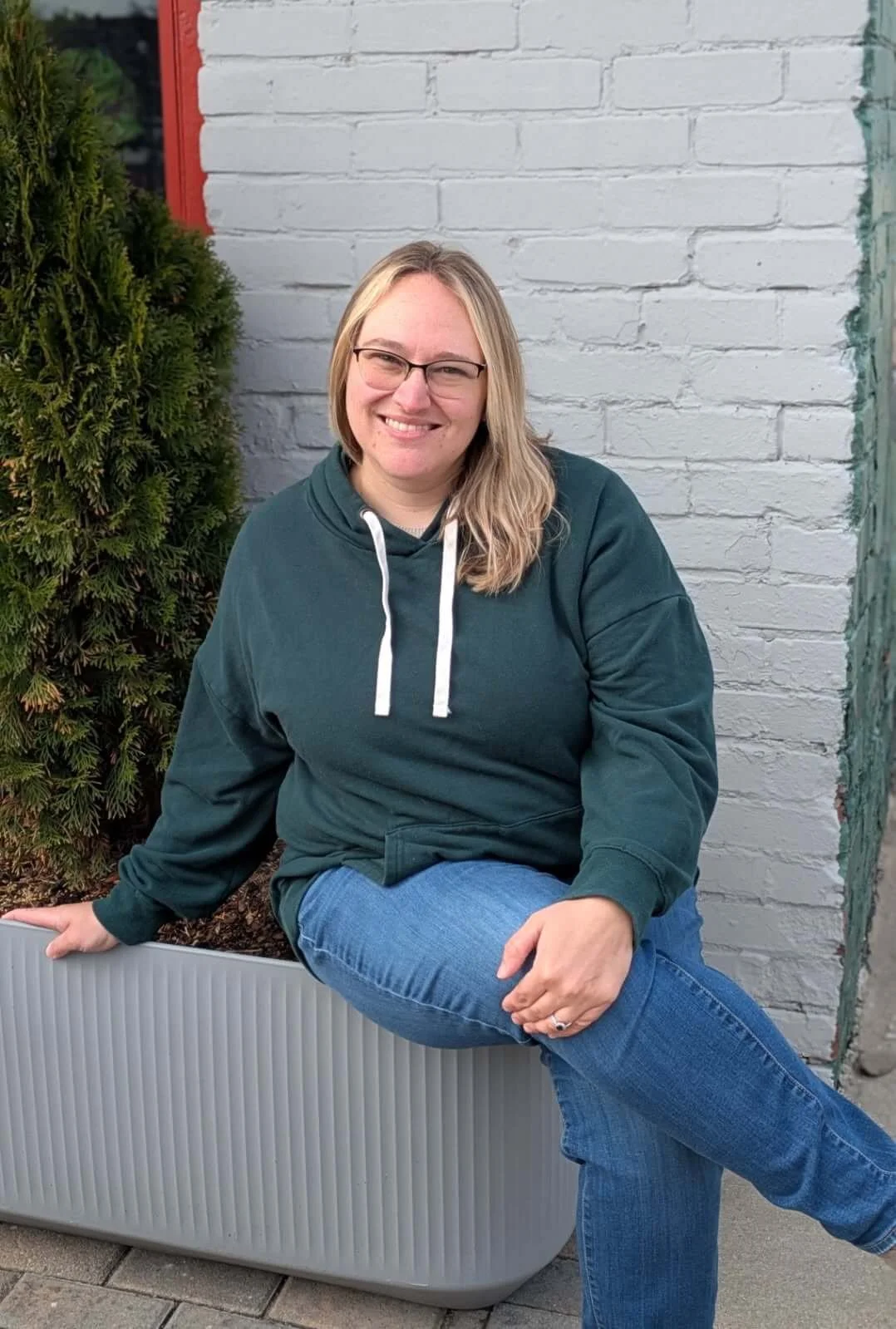
Like most specialists providing neurodivergent-affirming care, I have lived experience in this area. When you share your experiences around time management, task initiation, or attempts to make or keep friendships, I will get it. I wont suggest you keep a planner, set an alarm (that you will ignore), or teach social skills for maintaining friendships. Why haven’t these strategies work for you? I can assure you it’s not because you don’t care - If you’re here I believe you desperately want things to change. These strategies don’t work because your brain is wired differently.
Want to know more details of my story? Feel free to ask! I believe strongly in the power of community and am happy to share my experiences with others.

Here’s what we’ll do together
Therapy can help you navigate life’s challenges
Being neurodivergent can feel like a full-time job. Remembering to care for yourself, completing tasks with unclear instructions or expectations, and navigating sensory overwhelm - It’s no wonder there is little energy left to prioritize connecting with others. Therapy will not remove your neurodivergence, but it can help you to address these distressing aspects the neurodivergent experience.
A cornerstone of most therapeutic options is psychoeducation - or learning about psychological concepts including diagnoses, symptoms, causes, prognosis, and treatment options. Learning about the formal diagnostic criteria and common associated traits often leads to greater self-acceptance, especially when you realize just how common these undisclosed struggles are within the neurodivergent community. By gaining an understanding of how your neurodivergent traits manifest, you will be better positioned to identified effective accommodations - both to request from others and to provide for yourself. I am happy to help you brainstorm accommodations and will certainly make room in session for you to practice using these accommodations as needed.
At its core, the neurodivergent experience is comprised of many isolated moments of not meeting the expectations of others. When this is coupled with rejection or abandonment, it creates a perfect storm for the development of complex, relational trauma. Using evidence-based techniques from attachment-based models (e.g., emotionally-focused individual therapy (EFIT), narrative therapy, and internal family systems (IFS), among others), you will be empowered to process unresolved trauma from a neurodivergent-affirming perspective. Previous neurodivergent clients have reported increase in self-esteem, a greater understanding of themselves, and more willingness to engage in healthy relationships.
At the end of the day, I want you to know:
You are not broken.
You do not need to define yourself by the perception of others.
